Zone 09 · Turf · Feed
Fertilization for Northwest Arkansas lawns that have gone thin and pale
Treatments tailored to your yard, built to promote steady growth, deeper color, and resilience against pests and disease, so the lawn holds up through the whole year.
Chapter 01
What a hungry lawn looks like from the street
A lawn that needs feeding tells you early. The blades turn pale or yellow-green instead of a deep, even color, the turf thins out, and bare gaps open up between the healthy patches. Stand at the curb and you can see exactly where the grass has stopped filling in.
Weeds notice before you do. Thin turf leaves daylight at soil level, and anything that can sprout there will. Across Springdale, Rogers, Bentonville and Fayetteville, plenty of yards sit on stiff clay that holds less of what grass needs than people expect, so the lawn runs out of steam sooner than the calendar suggests.
Thin color is not always hunger, though. Shade, compacted soil, dull mower blades and an uneven watering habit all look much the same from the sidewalk. That is the reason treatments get tailored to the yard instead of applied one way everywhere. Feeding a lawn that is really being scalped or starved of light only wastes the effort.
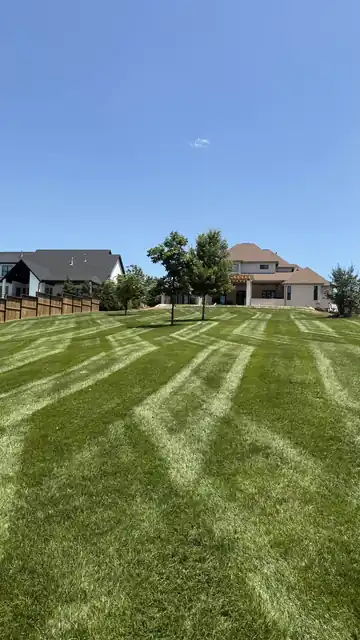
Tall view of a chevron-striped lawn with neighborhood homes behind it
Tailored treatments, timed to the season
Pureleaf's fertilization service rests on one idea: your lawn is not your neighbor's lawn. Treatments are tailored to promote robust growth, vibrant color, and resilience against pests and diseases. A sunny front yard in full summer exposure and a shaded back corner under mature oaks want different things at different points of the year.
Timing does most of the work. Grass responds when it is actively growing and sheds the effort when it is not, so the plan follows the season instead of a fixed date on a flyer. The details depend on your grass and your property, which is why they get worked out on the yard rather than printed in a brochure.
The aim is a lawn that looks lush in the middle of the year and still has its color when the weather turns. A feeding program is something you keep up through the seasons, not a single visit that fixes everything at once.
Chapter 03
Why feeding and mowing belong together
Fertilizer makes the grass grow, and the mower decides what that growth looks like. A fed lawn cut on a steady weekly rhythm fills in, darkens up, and crowds out the gaps that weeds like. Skip the mowing and the feeding shows up as shaggy, uneven growth instead of a clean carpet.
Weeds do not stay in the lawn, either. They creep in from the beds, so weeding along the mulch lines and around shrubs is part of keeping the turf clean. Pureleaf crews already weed beds regularly and keep edges sharp on their visits, which means one team sees the whole property and notices when something changes.
To get a plan for your yard, call or text (479) 601-2057. The process is three steps: send a text, chat on the phone, then receive a quote. Mention your town and the part of the lawn that bothers you most, and the conversation starts there.
“We absolutely loved our experience with Joel and his team. They were thorough, detail oriented, and gave the best customer service. Our landscaping looks amazing for the spring/summer season.” Tara Penner, Google review.