Zone 05 · Turf · New
Sod laid on prepped soil, so a bare or beaten-up Northwest Arkansas yard has a lawn again.
Pureleaf lays sod to bring a worn-out or bare yard back. The crew works quickly and carefully, so the job is done right.
Chapter 01
When sod is the better call than seed
Some yards are past patching. A lawn left bare after construction, a front yard gone patchy and brown, or a stretch of dirt where the old turf finally gave up all share the same problem: nothing is holding the soil. Seed can fill that in, but it takes a long season of watering and waiting, and a hard rain can wash it around before it takes hold. Sod gives you a finished green surface the day it goes down.
That is why Pureleaf's crew reaches for sod on renovations around Springdale, Rogers, Bentonville and Fayetteville. Their own photos show the range: a bare dirt front yard graded and ready for rolls, a patchy brown lawn at the street, and a stacked-block retaining wall with fresh sod laid along the front. The idea is the same every time. Get green cover onto soil that has none.
Seed still has a place on big, low-traffic ground where nobody is in a hurry. For the front yard the whole street sees, or any space the kids and dogs will be using next month, sod usually earns its place. Talk it through by text or on the phone and the crew can tell you which one fits your yard.
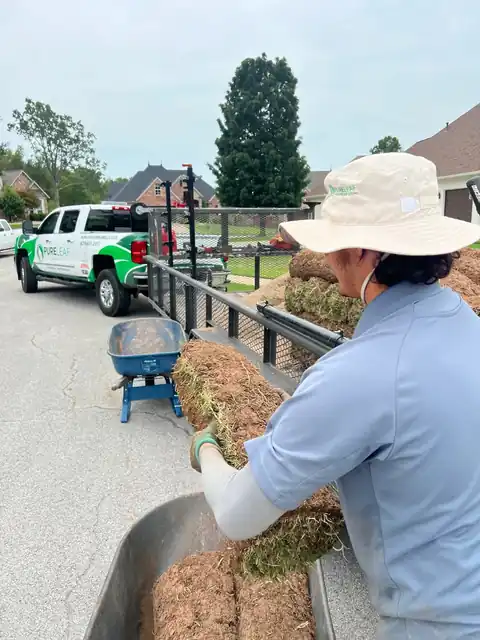
Pureleaf crew member in a sun hat loading rolls of sod from a trailer beside a branded Pureleaf pickup
How the sod goes down, start to finish
The part nobody sees decides the result. The crew grades and prepares the soil first: old dead turf and debris come out, low spots get filled, and the ground is left firm and even. Sod laid over lumps and hollows stays lumpy, and the low spots hold water and turn yellow.
Then the rolls come off the trailer and onto the lawn. Pieces are laid snug against each other with the seams staggered like brickwork, so no long straight joint opens up in the summer heat, and they are trimmed to fit around beds, walks and the edge of the drive. The sod is pressed down so the roots make contact with the soil, then it is watered in. Their photos show a crew member in a sun hat loading sod from a branded trailer, which is about as plain as the work gets.
Speed matters because sod is alive and dries out fast once it is cut. Jeromy Houchin wrote that the crew was “extremely fast” and that the lawn looks great. He also named Sergio for great communication and a friendly manner, which is the other half of a sod job: knowing what is happening, when, and what comes next.
Chapter 03
The first weeks after the sod is down
New sod needs water, and plenty of it, until the roots grab the soil underneath. In general terms that means keeping the sod and the soil beneath it damp through the first couple of weeks, with more water in hot, dry spells, then easing off as the roots go down. Lift a corner to check. If it pulls up easily, the roots have not set yet.
Stay off it as much as you can at first. Foot traffic, dog runs and backyard games leave dents and loosen seams before the roots have anchored. Hold off mowing until the sod has rooted and the grass is tall enough to need a cut, and keep that first cut high with a sharp blade.
Once it is established, the new lawn goes into a regular routine. Pureleaf mows, edges and trims weekly across Northwest Arkansas, from Lowell and Bella Vista to Shady Grove, so the lawn keeps its shape instead of going shaggy between cuts. To talk about a sod job, call or text (479) 601-2057. Getting a quote takes three steps: send a text, chat on the phone, receive a quote.
“Sergio was great to work with, great communication and very friendly! The crew did an amazing job laying our sod. They were extremely fast and it looks great!” Jeromy Houchin, Google review.